Sunday, December 2, 2012

Film Trailer Review


The trailer I chose to review was that of the teenage heartthrob conclusion to the Twilight Saga: Breaking Dawn Part 2.

Figure 1
Narrative: This trailer laid out the basic premise for the movie: Bella is now a vampire and her daughter Renesmee is thought to be a monstrosity that she isn't, and the 'law enforcing vampires' have to fix this mistaken crime, causing the Cullen's to rally together to protect the child. The trailer was definitely fast paced and action packed, which really goes along with the drama/thriller/romance genres, with constant quick cuts and fade to black/fade in transitions. Figure 1 shows the introduction of the antagonists, and marks the change in the story from happy and upbeat to serious.
Figure 2
Mis en Scene: Figure 2 shows the scene days before the encounter with the Volturi, as the vampires have all gathered together to assist the Cullen's in their ploy to keep their child safe. This demonstrates the support that the Cullen's have, and displaying them in a home environment brings friendly feelings to the surface, hiding the strife that is boiling beneath. In addition, by having all the actors look at one place, it directs the audience attention, as they are anticipatory or what will come next, and also draws attention to the one werewolf, as he is the only one that isnt a vampire in the room.
Figure 3
Cinematography: Figure 3 displays a very creative shot following Bella as she is sprinting through the forest. She is blurry in the image to show her newfound vampire speed. In addition. the area around her seems distorted, signifying her new heightened vampire senses, and again her speed. Overall, the cinematography of the trailer focuses on a range of MS to CU, with a few long shots mixed in. Figure 3 is an over the shoulder shot.
Figure 4
Edit: The edit follows the actual plot line of the movie, which helps the continuity of the edit and allows for smooth flow. Dialogue from the movie is used to narrate the trailer, and also helps with the flow. All the cuts between shots are done as fade to black, then fade in. The cutting is really quick with almost no shot lasting for more than 2 seconds.


Figure 5
Sound Design: Most of the trailer has an intense beat that is fast paced to match the edit. In figure 5, the track changes to a single beat that matches the seriousness of the threat that has emerged against the Cullens. In addition, there is a slow buildup and then eruption of the background music as it builds up the suspense which erupts into the title info about the movie.

Documentary Pre-Production


Trevor Fisher Andrew Curd

Purpose: to gain knowledge on project SEARCH at san mateo hospital

Contacts: creators of the project interns

Interview Questions:
what is the program?
who/ how was it started?
what does it aim to do?
how has it helped society?
what are the goals?
how does the program reach these goals?
how successful has the program been?
how does the program benefit society?
What is a typical day for the interns
interview questions for interns
how has the program helped you?
whats a typical day for you like?
how long have you been an intern here?

Shot List
Opening shots of exterior of hospital. Hear voice of director of program
Interlace B-Roll with interview
Closer is telling how to help support and how to find out more information. closing shot shaking
her hand then slow fade to black?

B-roll
people working
shots of the hospital

Tentative dates:
December 2 first b-roll day? possible preliminary interviews?

Tuesday, November 27, 2012

Documentary Critique: IRL-In Real Life


1. The principle subject of this documentary is to discuss the addiction of World of Warcraft by Anthony. Its purpose is to highlight his addiction, with the hope of helping others get over the same addiction held by many that play video games. It is filmed to critique the nature of the addiction, and hopes to assist those to move past the addiction.
Figure 1

figure 2
2. This documentary opens with the quote seen in figure 1, giving an initial context as to the meaning and relevance of the documentary as a form of expression. In addition, the filmmaker later conveys a lot of information at once when he overlays multiple audio bits discussing his accomplishments in the game, but mostly uses an informal monologue with the viewer recounting his story. Additionally, he uses shots of his screen as he plays the game (figure 2) and still images of his own life (figure 3) to create a parallel between real life and the gaming world. 
figure 3
3. As previously stated, the filmmaker doesn't have actual footage besides his gameplay footage. This is done because it emphasizes the parallels between his real life and his game world. The filmmaker does this because it helps him to accentuate the problems that strike society as more and more individuals are becoming addicted to video games. Therefore, his choice to only use stills for his life separates it from his gaming life, as he attempts to show how much better his life is now without the game. 
4. This documentary is done entirely through voiceover, there is no footage of the filmmaker talking directly to the camera. His commentary mostly criticizes is own choices, which serves well with the visuals placed in for the gaming world. The visuals and commentary together further accentuates his need to escape from the shackles of his gaming addiction. 
figure 4

5. One powerful symbol I found was in the scene where he displays the messages the female he met over the game (figure 4) and when he lies to his friend to get out of going out (figure 5). These symbolized the extent to which his addiction had taken over his life. By not having voiceovers here, the filmmaker allows the viewer to experience the shock at the extent of his addiction, and how much control it truly had over his life. 
figure 5
6. Already answered
7. The film features no other voiceovers other than that of the filmmaker, and doesn't cite outside sources except the opening quote that gave context the documentary without showing any shots yet. 
figure 6

figure 7
8. My favorite use of his gameplay footage and graphics is shown in figures 6 and 7. Figure 6 highlights what i consider the most important and powerful graphic, that he started playing warcraft on valentines day, and has been single for 6 years. The following shot, figure 7, displays the in game sadness at his loneliness. These shots worked in tandem to lead to him getting over his addiction, and living his life among the living not the virtual. 
9. Doesn't directly address camera. 
10. There is little to no staging done as it is game footage and still images. I enjoy the close up in figure 7 however. 
11. As previously stated, his edit creates a parallel between reality and the virtual world and argues how pathetic his life is with warcraft at the center of his universe. There are more shots of his gameplay than of himself, as even the first shots of the filmmaker show him living his addiction. Later however, we see him enjoying himself and having fun and multiple images are displayed. By editing in this way, he guides the audience along his journey of addiction, helping show the audience how he is able to overcome his addiction and emerge as a better person without the game controlling his life as the game footage controlled most of the documentary. 
12.  Music is only used in the initial opening scene, and is used to build suspense and help build upon the context from the opening shot of the quote. 
13. Very little cinematic choices are made regarding the filming, as a majority of his message is conveyed through the shot choice, edit, and voiceover. 
14. I find the film very effective. I felt attached to Anthony, and was happy when I discovered his journey to rid himself of his addiction had succeeded. I was able to connect well with him, and felt he did an excellent job conveying his problem, and showing how others can move past their addictions like he did and live a better life after. i felt his film was triumphant enough to reach out to other forms of addiction, and help those suffering from other addictions, a true success of a documentary as it can transcend many addictions. However, I feel even just one direct shot of Anthony talking to the camera could've deepened the connection with the audience, but that is my only critique. 


Tuesday, October 9, 2012

Soviet Montage and Realism

In "The man with a movie camera," there is a random assortment of ideas that do not seem to make a story. At 3:10-3:18, a shot of a lamppost, someone sleeping, and a picture of a man looking outward to what can be assumed is the sleeping figure is shown in succession. This is an example of the Soviet montage because it leaves the meaning of each shot up to the interpretation of the audience, and this interpretation will vary from person to person. In fact, there isn't even a plot structure to the film, as this would distract from unbiased interpretation of the work. Based on this, it can be assumed that this is an example of the constructive editing of Pudovkin, which is the style in which every new shot should make a point and contribute to an overall picture or story, we can see a mini portion of a story in the previously mentioned segment. It shows that since it is morning, the girl should wake up, and she is being watched by an old man, however there is no overarching story line, making this a very unconventional film. Conversely, in "The Bicycle Thief," it is easy to see constructive editing used. For example, from 0:33-2:40, there is a buildup of the internal conflict of our father protagonist of whether or not to steal a bike, as seen by the editing between shots of the protagonist, the protagonist's son, and the two bicycle locations.

The Kuleshov effect is linking tiny details together to create a story from it, and is demonstrated in "Man with a movie Camera" from 0:40-2:10 when all the shots of the movie theatre are linked together to show that there will be a movie playing soon. Also, in "The Bicycle Thief," from 4:42-5:17, the Kuleshov effect is used as cuts between the boy with his father's hat and the father restrained by the men that captured him and cut between, and reveals the subplot of the father trying to do what is best for his son, and having a risk he takes backfire and his son shows his worry for the safety of his father. Conversely, there is no true plot shown in the movie theatre scene, as it doesn't have any sort of overarching importance to the short film.

The Eisensteinian montage was using contrasting images that were 'incomplete' to create new meanings, which is demonstrated in "Man with a Movie Camera" from 6:30-6:45 showing a man that appears to be a doll carrying a women that also seems to be a doll, then the contrasting image of a couple staring. These contrasting images reveal two opposing characteristics, closed off and suspicious as opposed to open and uncaring. Additionally, "The Bicycle Thief" shows the Eisensteinian montage from the earlier mentioned scene with his contemplation of whether or not to steal a bike because there is the contrasting image of the innocent child with the tested father and the lone bike versus the many bikes.

Overall, the entire film of "Man with a Movie Camera" is difficult to classify as realist because it doesn't follow any of the editing principles associated with realism because the long shots that are used remain stationary and have to be cut to move to a different angle, as a separate shot. Conversely, "The Bicycle Thief" follows the realist style specifically during the bicycle chase scene, where long shots are used and there is panning to follow the protagonist's movements 3:30-3:48.


 "Man with a movie camera"

"The Bicycle Thief"


Tuesday, October 2, 2012

Styles of Filmmaking-Editing

Taxi Driver (1976)
 "Are you talkin' to me?"


Realism section: 0:51-1:21
No cuts or changes in angle of the shot. Maintains a medium shot of Travis Bickle that lasts for 30 seconds (incredibly long when compared to standard shot length of a comparable modern day movie) that was in deep focus. There is a heightened sense of reality that goes along with this portion as it seems that Travis is talking directly to the audience. However, the whole movie itself is not realist.

The Dark Knight
"Chase scene"

Classicism entire selection:
This selection is an example of parallel action, an element of classical cutting made famous by Griffin. Additionally, this scene shows many movement and direction matches that are necessary to chase sequences. Also, there are numerous eyeline matches, does not break the 180° line, and numerous reverse shots to show the danger of the Joker attacking the SWAT SUV.

Run Lola Run
"first run sequence"
 Formalist: This movie is almost entirely formalist as it goes back and forth changing continuity and manipulating time throughout the duration of the film. Time is both sped up and slowed down, and the cutting is different in each of the three scenarios.

Friday, September 28, 2012

Characterization

The character I chose to review is Obi-Wan Kenobi, focusing on his character in Star Wars Episode III, Revenge of the Sith. In this film, Kenobi appears wearing both his dark brown jedi robes or his tan tunic with brown pants, and his glorious blue lightsaber. It is apparent there is an air of respect that he commands from those around him, as he has become a jedi master, a man dedicated to preserving peace and prosperity among the people. He is trying his very hardest to help his apprentice Anakin stay away from the lull of the dark side, but has difficulty doing so. In the final scenes of the film, Obi Wan is forced to fight his former apprentice Anakin, who has turned to the dark side and slaughtered a large number of jedi and jedi in training. During this battle, Obi Wan shows deep moral and emotional conflict as he is deeply saddened by his apprentices choice to move to the dark side, and still believes he can try to save him, even though this is against the jedi way. His internal conflict is whether or not to kill Anakin, and he struggles with this decision through the entire fight, and the obvious external conflict is the battle itself and saving himself. Obi Wan cuts down his apprentice and leaves him near the lava to die. Before leaving, he proclaims that he loved Anakin, but this was the way things had to be, Anakin had to pay for his actions. After leaving, we see Obi Wan shed a tear for Anakin, demonstrating his continued compassion for the apprentice, someone he considered to be his brother. His flaw is his compassion, but it is a flaw only in the sense that it is holding him back from pushing past the emotional and physical blockade of Anakin, and killing Anakin. He has to overcome this challenge, as the deciding blow in the battle was struck by Obi Wan, but if he did not strike this blow as Anakin was jumping at him, Obi Wan himself would have been slain.

Step outline

Trevor Fisher
Mr. Bigue
IB Film HL 3th
27 September 2012

Step Outline for untitled movie
SceneDramatic intent
1. Opening titles shown, gunshot heard

2. Character shown walking alone, voice-over tells thoughts

3. Parents introduced as character ignores them, tone of resentment audible
4. Character by himself in a semi forested location. Someone notices him and walks over to see if he is alright.
5. pair begin to hangout. 3 location shots of friends having good time laughing together, show calendar detailing all the time the duo spent together
6. One day the duo can’t hangout, character upset and angry

7. Second day in a row without hanging out, physical attack then character runs away


8. Character follows friend and listens to conversation of how he thinks the main character is weird and really clingy. Character shows extreme anger.

9. Character wakes up the next day, ignores his parents and walks to place he always sees his friend. When his friend arrives, character makes monologue before killing friend

10. Note found on friend detailing apology for what he said. Decides to leave society.
Brings up questions right away about what is happening, gives hint of killing.
Shows loneliness and demonstrates his inner thoughts of a desire to be a more confident person.
Character blames parents for never being around, shows loneliness
Shows character’s first friend, loneliness begins to disperse.
Character bond shown through enjoyment of time together.
Character’s dependence on friend demonstrated. Anger begins to grow Shows the escalation of his desperation to see friend. Shows how much he depends on his friend. Details his fright at returning to loneliness, doesn’t want to lose friend.
Shows what desperation makes our character do. Anger demonstrates his feelings of betrayal thinking friend doesn’t want him anymore because chose to be with other people rather than him. Shows determination to achieve a goal. Shows self justification and feelings of depression. Feels like the only way to make his friend understand how much he means to him is through killing him.
Shows the character’s shock, demonstrates how he was quick to judge and didn’t give friend a chance to defend himself. Teaches message that you need to always listen to other side and not jump to conclusions before talking to this other side.

Tuesday, September 18, 2012

Google Reader Article Response

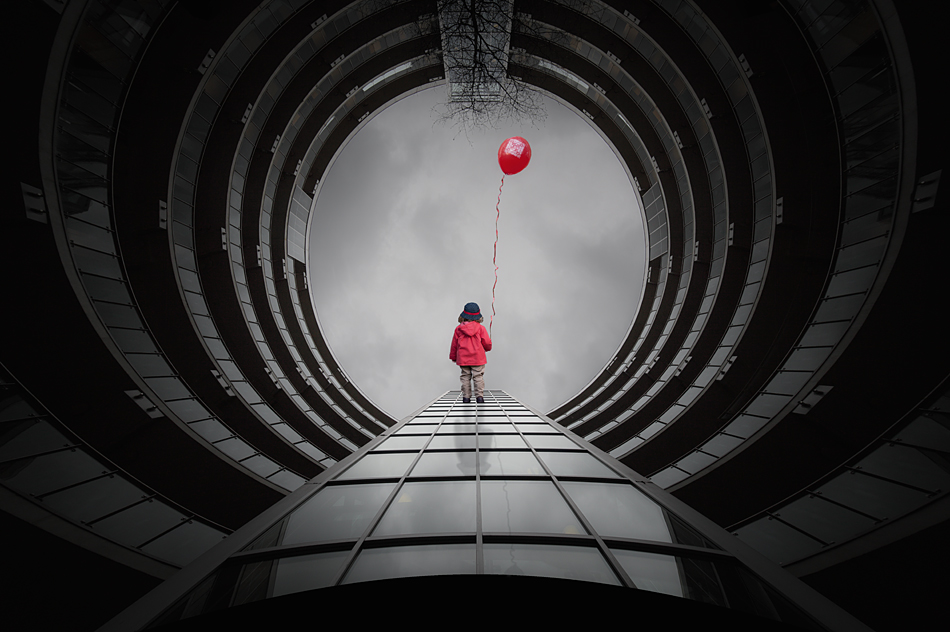
ChaseJarvis_EmergingTalent_Surreal_MartinMarcisovsky_


Chase Jarvis posted "Emerging Talent — The Surreal Imagery of Martin Marcisovsky," showing a scene that is mainly up to interpretation. I really enjoyed the fact that the image could be interpreted differently depending upon your individuality, and I thought it was a dark mood with a desolate future for a lonely child, but she would stand out in this gray future due to her bright colors and personality, as she will challenge social barriers and norms. The individual aspect is great, as a friend or complete stranger could have an entirely different perspective on the image you are both looking at, displaying individualism in society.

follow Chase Jarvis here!

"When you find me" film review


This demonstrates a backstory of the film, at a location in the afterlife. The tree could be an allusion to either the 'world tree' or the tree that grew the apples of eden in paradise. It is apparent this is the afterlife because of the white color white, the color of purity. It seems to be a very pensive location as there does not seem to be anyone there, and there seems to be no end to the beautiful landscape.

This demonstrates a discovery for the Lizel of her mothers death, not necessarily journey to heaven. This creates a moment of a loss of innocence for the young protagonist. However, this revelation does not change her mindset and she continues on her journey to find her mother and go say goodbye. She is shown to be a strong dynamic character that acts older than she is and is an archetypal curious young child figure.


Character of Lizel's older sister shows her feelings of sadness and depression as she was unable to say goodbye to her mother, who died. She begins to feel anger and resentment and blames her little sister for preventing her from being able to say goodbye to her mother. Additionally, Lizel's older sister is unsure what to do, as her facial expression and body language show that she was very close to her mother and feels lost without her.

The goal is shown here as traveling in a spaceship to try and discover heaven. The exact location is not known, but it is surprising to find Lizel's mother there, welcoming and beckoning her to go and find her. Trying to contact the mother becomes the main goal of Lizel.


This scene has a depressing mood, as it shows the cemetery where the sisters' mother is buried. Lizel's sister is crying, while Lizel is determined to find her mother. The tombstones give a solemn mood, and the darkness gives an ominous mood that adds to an overall tone of depression.


This scene demonstrates the unknown as the sister had found her 'spaceship' but didn't know how to work it. She feels she needs to figure how to operate this machine so that she can find her mother and talk to her one final time. As an audience, we do not know what to expect and are unsure if she will be able to pilot this vehicle.


This scene explains the relationship between Lizel and her sister, showing how much it has diminished since their mom had died. They don't seem to talk very much and seem to be very disconnected from each other. Lizel's sister appears to be in disarray and still doesn't quite have her life in order, and she still seems to be mad at Lizel for preventing her from being able to say goodbye to her mom.

This shows the initial setting of the short film, but this setting shows Lizel laying in the grass, in the off white color. This setting seems to replicate the holiness and undisturbed nature of heaven. This setting is important because this is where Lizel is able to see her mom again, and give her a final goodbye.

 This scene shows the theme of time. Time is shown as we can see the sun is just rising, showing that Lizel's sister and father had been searching for her all night. This time is important because morning is seen as a time of new beginnings, and a brighter future ahead. In this case, Lizel goes on to live a happy life, but Lizel's sister emerges less than happy as she is down on her luck, and is stuck in the shadows of this shot. Additionally, time is important because it demonstrates the love and care her family had for her even when she ran away.

This scene shows an obstacle that stood in the way of Lizel. She had to get over this physical barrier of the fence, which she needed the help of her sister to do. This is important because it showed that if the sisters work together, they can get through a lot and push through hardships that they face. In addition, going over the fence allowed Lizel to cross into an area of danger and new discovery.

Tuesday, September 4, 2012

10 Themes of Storytelling

When discussing the artistry behind film and/or photography, there are considered to be 10 major themes associated with them: mood, goal, backstory, character, obstacle, relationship, setting, the unknown, time

Mood: conveys atmosphere, feelings or tone
This picture demonstrates a mood that is ominous and senses the danger to come. The color temperature leans towards the blue, cooler side of the spectrum and the shot is in deep focus. The most vibrant bolt of lightning is set off center at the lower right intersection point, while the tornado dominates the left half of the frame. The shot is angled upward to look at the storm and make it seem as a dangerous and superior force.


Goal: whatever the character is pursuing
This image demonstrates the butterfly, as it has reached maturity and completed its goal of being able to fly. This is a narrow focus lens, as is demonstrated by the extremely shallow focus, with the background completely blurred out. There is a slight graphic vector along the flowers that has a downward lateral direction. The butterfly itself is centered at the upper right intersection point and dominates a majority of the upper half of the frame. The shot is at a neutral level showing equality between the viewer and the butterfly, suggesting that the viewer can also achieve his/her goals if they try hard enough and give enough effort. 

Backstory: a history that promotes fuller understanding of the narrative.
This image is one that demonstrates a sense of hope as a flower is emerging in a field of ice, showing the will to survive. The flower bud is located at the middle to upper half of the frame, while the rest of the flower is in the middle to bottom half of the frame, making sure to have the important points at the intersection points. The lens type cannot be determined for sure, but is most likely a wide angle lens as the shot is in deep focus. The foreground is composed entirely of the flower, while the mid and backgrounds are the cold encasing ice. The camera is looking down to view the flower, showing the insignificance of just one flower, but also inspiring hope that one day there will be more flowers that arise from the extreme cold of the ice and survive. 


Character: can be anyone or anything
This shot is composed of a white horse running through an open field. The shot has the eyes of the horse aligned wonderfully along the upper right intersection point and the horse in general seems off centered. The shot does not however give a lot of noseroom or leadroom so it is difficult to determine where the horse is headed. The lens is most likely a narrow lens as in the foreground the horse is in clear focus while the background of the trees is slightly out of focus creating a shallow focus. This white horse is a symbol of purity as demonstrated by his white coat and mane.

Obstacle: anyone or anything in the character's way
This shot is composed of tornadoes lined up in a row along the horizon, demonstrating an ominous future for any in its path. There is a graphic vector that protrudes from the bottom left corner to the middle of the right side of the frame. For this shot, a wide angle lens is used to maintain the deep focus over a large expanse of land. The majority of the tornadoes are located in the left side of the frame, with the bottom most points of a majority of the tornadoes located around the bottom left intersection point. The camera is in a neutral position in relation to the object, suggesting that although the power of the tornadoes is noted, there is also a feeling that the character would be able to stick it out and survive through the obstacle.

Relationship: a relationship between anyone and anything
This is a heartwarming image of a man (assumed to be the father) holding a baby in his arms, demonstrating the strong bond that the two share. This shot could have been taken using either a narrow or wide lens as the shot is in deep focus, with the foreground being the baby and the background the chest of the man. The baby's eyes are located at around the upper right intersection point, and the head is slightly off centered towards the right. The camera is in a neutral position as it is highlighting the possible fragility of a young life, and demonstrates its need for protection.


Setting: any location or environment
This shot shows the barren landscape of the barren savannah, highlighted by the graphic vector of the ground and the wide open expanse behind it that reveals nothing but open space. This shot was taken using a wide angle lens, and is in deep focus. The tree is mainly in the lower and middle left areas of the frame, with the rocks going across the lower middle area of the frame. The majority of the shot is open space and sky, demonstrating limitless possibilities for the future of the character.


the Unknown: can be anything unexpected, a twist

This shot is of a busy street and is taken in some sort of tower at a high angle looking down upon everything else, making them seem insignificant, The shot has a nice use of rack focus where the foreground of the fence is blurred, but the street and buildings are in focus. There are graphic vectors aplenty due to the fence that act as their own points of intersection in the frame.


Time: represents a day or time in history
This shot is interesting because it shows the reflection of the sky over a graphic vector the cuts the shot in half and separates reality from reflection. This was taken with a wide angle lens and is in deep focus. The focus of the shot is unclear, but I think it is the bottom half which shows the reflection. The photographer is trying to grab the attention of the viewer and show the divide between reality and fiction, and show that time can change everything, with the reflection in the foreground, the divider in the midground, and the real sky in the background.

Wednesday, August 22, 2012

Film Figure Review, CL!CK: A LEGO Short Film


Figure 1
CL!CK: A LEGO Short Film
CL!CK: A LEGO Short Film, is a stop motion animation about an inventor in a precarious position, as he is stuck with proposed inventions for how to make human flight possible, but is unable to find one that is successful, and has all of his failed ideas in a pile that seems to be growing (figure 1). I really enjoyed watching the human struggle aspect of this short film; its easy to connect to as everyone has gotten frustrated over a problem before discovering its solution. I enjoy the 'feel good' ending of the movie. It had a simple plot that was easy to follow, and is enjoyable by all audiences. I really enjoy the originality of the short film, it was different than everything else I've see thus far. 

Figure 2
Figure 3
One stylistic choice I enjoyed was the motif of LEGO's, specifically when they would break apart and reform into something new (figure 2-3). This helped show the flexibility and variability of success and opportunity, and shows the path to success is not fixed, and can change constantly. It is little moments like the surprise that is shown on the actor's face that help further along the mystery and discover whether or not he'll figure out his dilemma of human flight. This idea is furthered as we have our man set up in the mid-ground of the frame, and the invention is set in the foreground, with a slight blur to the background, diverting attention away from the background. 
Figure 4

One of my favorite scenes was when he was walking down the 'hall of inventions' and he walks past all of the ideas that were close to being completed, but not quite done. I found it fitting that the editor chose jump cuts and the camera was a POV shot of each idea. My favorite unfinished project was "world peace," (figure 4) because he just walked past it without a glance. It helps demonstrate that we are close to achieving world peace, but it isn't completed, suggesting we still have some work to do before we can achieve world peace.


Figure 5
I liked the setting of the ideas hallway (figure 5), it helps build up the motif of assembly, a standard factory job. I enjoy this appropriate setting as the best place for ideas to be created is in a room that is mainly white. White symbolizes a new start, better more pure things to come, such as world peace. It also alludes to the fact that white is associated with something blank, and that great ideas are waiting to be born and placed onto the 'canvas.' This sends a great message that creativity can be born anywhere, and anything is possible. 
figure 6

I most enjoyed the ending of the short film. My favorite part was when the ? on the idea cube changed into a ! and he figured out how to make his 'human flying' mechanism. This is truly a happy moment in the film, and leads up to the conclusion of the conflict:would he make his machine? or would he fail again? 


figure 7
Here, his dream is realized and he completes his flying machine (Figure 7). This truly captivates what the viewer has been hoping for, the success of this hard working man, for his hard work to finally be realized and his dreams achieved. When his dream is achieved, he is astatic and ends up with his picture forever framed in the hall of ideas as another great human mind(Figure 8), with the likes of Einstein and others. This dream completed helps convey the overall message that dreams do come true if you are willing to work as hard as you can to make sure the dream comes true. Additionally, I found the framing choice interesting. Cutting off the top of the frame just below the shoulders and not showing the head was a good set up for the picture on the wall (Figure 8). 

Figure 8
Figure 9
I loved this closing shot of other people walking down the halls of the LEGO dream factory because it shows their will always be those few that are curious and will try to invent and want their dreams to come true. It shows that the next generation is ready to take on the challenges created and those that have been almost solved for                
themselves, as they are the future of civilization. 
I would definitely recommend this movie to those that have a few minutes on their hands, and want to watch a short feel good film to help motivate themselves for the day. 

Monday, February 13, 2012

Film Treatment

The gentle breeze rolled through the open window waking our young protagonist. He stretches and gets up  to see a bullet fly past his face. He rolls and grabs his emergency pistol.

He slowly enters the next room and notices a message left for him.

"Dear _____, I'm glad I didn't kill you today maybe tomorrow will be better. Your friendly ghost Bob."

"What is this?" He hears erie 'boos' coming from a closet. He peers inside to find the ghost.

What are you doing here? Why can I see you? Why do you have legs? Wait a minute I know who you are!!

Ghost, "Umm you do?"

Yes of course!! you're the ghost who will show me the error of my ways!!

Umm no actually I'm here to show you what would happen if you were dead so... you wanna go?

Hmm well you don't look like you can fly? how will we get to that time?

Ghost pauses.... wimpily slaps ___ across the face and he dramatically passes out.
_________________________________________________________________________

Scene 2
Ugh *wakes up* where am I?

Ghost: you are in the future I think it hasn't happened yet so I can't tell if this is the future or not.

Oh god what did you do to me? I can't remember a thing! except you slapping me and then i passed out and woke up here! what did I miss?

Um nothing lets just look at the lives of your mom and brother.

Look in window, see them playing around and having a good time. Ghost looks bored.

Okay these guys are happy lets go...

Wait! I wanna watch them! their is no way they could have fun without me

Ghost bluntly: um dude they are laughing lets go we have a long walk ahead.

Why do we have to walk? can't we just go and like poof there? I've seen enough movies where they do that. Or what about flying? I've always wanted to do that!! *oblivious to ghost going behind him*

urgh! hits ___ in back oh head with small shovel. Fade to black

Fade in to opaque shot where ghost is seen carrying ____ hear him complain about how heavy ___ is.

A phone rings in the ghosts pocket. Immediately drops ____ on the ground luckily a pillow was there

Ghost remarks, what luck he fell onto a pillow.

Hears voice, You got the goods? Good. Then bring the package to me now we are ready to finish what we started. Hang up

The ghost looks up and can't find _____. He turns around and ducks just in time to avoid a wimpy punch. The two have a slap fight and up on the ground fighting nothing.

Who was the call from?

Umm can we go back to see your mom and brother?

Don't avoid my questions!!!

I'll answer if you can catch me!

the ghost runs and ___ chases shortly behind him.

____ finally catches up at the doorway of his family home and happens to step on the ghosts sheet and he trips and falls through the dark doorway and a surprise party is seen.

The 'ghost' gets up to reveal himself as the best friend of ____ and then he asks why there is a surprise party. He responds by saying didn't you look at your calendar after i shot at you?

Um no? flashback to calendar

Oh crap its my birthday!! what about the package you talked on the phone about?

Um you were the package duh. oh well uh i guess i should thank you. I have one final question though.

What is it?

How did I think you were a ghost?

END

Thursday, February 9, 2012

Oral Presentation Part 5

The style of acting at the beginning of the extract shows Chris hurrying Christopher and Christopher drops his toy, causing a shouting match between the two. Christopher ends up crying and Chris eventually realizes why his son acted out of the way he has been portrayed during the majority of the novel. Also, Will Smith was most notably nominated for an Oscar for his role as Chris Gardner.

In my extract there are a lot of close ups and medium shots are common in the drama genre as they are some of the shots that add the most meaning to a frame, and there are also a lot of quick jump cuts in the editing. In addition, the scene in the church, which uses a variety of CU, LS, and MS with the gospel musical score makes a powerful effect on the audience, as they feel sympathy towards both the character and all the homeless and all they have to endure. Another part is that the lighting is slightly high or outside shots with natural lighting, symbolizing the high hopes and positive direction his life has begun to travel in. However, this is contradicted when he has money taken from him by his superior (big taking from small).

The three locations, Dean-Whitter, the streets, and Glide Memorial Church each symbolize different points in his life. The streets represent the worst part of his life, when nothing was going his way. The church is the renewal period in his life when he starts to finally catch some breaks. Dean-Whitter has two separate symbolisms, the first being the false life he needs to lead in order to get the job, and the post internship portion when his life is finally turned around and everything starts to look up.

Finally all of the extras that were used were actually homeless people that gave the perfect image of the homeless. Additionally, there were little to no special effects in my scene, and only reconstructed portions of the dean whitter office for set design.

Tuesday, February 7, 2012

Oral Presentation Part 4

1:35:39-1:40:39
1. Rationale: I choose this extract because it best signifies the homeless situation and desperation that Chris Gardner had to deal with on his path to success. Additionally, Chris has one of the last things taken away by a man 'above him' and in power, another recurring theme in the novel.

2. My extract relates to the film as a whole through the fact that the test for his internship was just completed and he is shut out of the shelter for the first time we see. This extract shows many of the recurring themes of perseverance, big taking away from small, and desperation, in addition to highlighting the key concepts of Chris and Christopher's relationship.

3. The film structure holds itself in two very distinct parallels. These two parallels are the fake life that Chris leads so that he has a chance at the internship, and the hectic life as a homeless single parent trying to find someplace for himself and his kid to sleep every night. My extract contains both elements of Gardner's life, from the calm, quiet and focused life at Dean-Whitter to the difficulties of the living on the streets. (directors style)

4. The plot is time and character driven, as the plot revolves around all the various actions that Chris makes and the various locations in which he travels to. Chris serves as his own narrator at times, further deepening the meaning of certain shots that would otherwise only have music playing in the background.

5. The director uses Chris yelling at his son to help push along the story and provide more depth in the relationship Chris has with his son Christopher. Also, the choir at Glide Memorial Church is used to show how Chris still has faith that everything will turn out alright even though everything has been going against him and there is little hope to grasp onto.

6. Our engagement with the characters and story is usually through Chris's reaction to all the hardship he faces, as well as when we see Christopher get emotional due to all of the pressure and stress that is set on him as well. Our engagements are usually highlighting one of the various recurring themes, perseverance, big versus small, etc.

Side note: Muccino influenced by Italian director Vittorio de Sica and neorealism movement that occured after the second World War. Major themes of neorealism in Italy were poverty and desperation.
Some scenes similar to that of the Bicycle Thieves by Vittorio de Sica, father eating with son.

http://en.wikipedia.org/wiki/Italian_neorealism

Sunday, February 5, 2012

Oral Presentation Parts 2-3

Part II
1. This film's political aspect is that it highlights the problems of the homeless that had plagued San Francisco during the early 1980's. It shows the day to day grind and the uncertainty that the homeless faced in their attempts to survive. It specifically highlights the number that could not get into shelters for the night and the trouble they had trying to get into the few shelters that were available.

2. The historical significance behind the film is that it is set during the global recession of the 1980's. It highlights San Francisco, an area that was hit particularly hard during this time.

Part III
1. This is an American made movie directed by an Italian, documenting a difficult point in America;s history: the recession of the early 1980's. This American produced film is shot in San Francisco and specifically represents the homeless situation in San Francisco. The film was intended for the American audience to discover the rags to riches story of a homeless man in San Francisco that made it under incredibly low odds.

http://www.moviefone.com/movie/the-pursuit-of-happyness/23572/synopsis
http://www.comingsoon.net/news/reviewsnews.php?id=18008
http://www.umc.org/site/c.lwL4KnN1LtH/b.2341837/k.1834/Movie_Review_iThe_Pursuit_of_Happynessi.htm
http://en.wikipedia.org/wiki/Early_1980s_recession

Monday, January 30, 2012

Oral Research part1: Genre and Audience

The film The Pursuit of Happyness (2006) is a biography on the life of Christopher Gardner, and is also a drama. This film can be classified as a drama due to its use of the themes of losing everything and trying to find one's place in the world. The classification of the drama genre is commenced when there is tension between Chris Gardner (Will Smith) and his wife and his wife leaves him, and after that his life continued to go downhill until he catches a break by being offered and internship. This turning point defines the film as a drama and allows for further development of the concept that one can still accomplish great things if they just persevere.

This film connects to the film Seven Pounds, another film by director Gabriele Muccino in which Will Smith stars. These films connect in that both of the main characters suffer tremendous loss, and choose to keep fighting to do good in the world rather than just giving up because the odds are against them. In addition, both characters experience a loss of a loved one, and the characters have to deal with the fact that it is their fault.

This film was made by Gabriele Muccino and written by Steve Conrad. This movie was based off real life events and Christopher Gardner's memoir The Pursuit of Happyness. The main purpose of the movie is to inform others about the troubles of life, and that everyone can achieve the American Dream. Also, this film helped to capture the emergence of the homeless, especially in San Francisco.

We can learn from the director by looking at the themes and also the family he depicts. He depicts a struggling American family going through a difficult economic time, as the country was having economic trouble as well. The rift that the burden caused stopped them from being able to be happy. Additionally, in the except, he depicts the strength of human character when it seems like nothing is going in Chris's favor, he still tries his hardest to remain strong. It is harder to find directorial preferences in this novel due to the fact that it is based on a true story and also based off of a book. A thematic connection is the loss of a loved one, as seen in Seven Pounds, where Smith also starred while Muccino was the director. While this film feels the blame because he couldn't make ends meet, in the latter movie the main character has to deal with the fact that the death of the love of his life was his own fault, along with the death of 6 other strangers. Similar stylistic choices include a lot of transitional shots with music playing and the actor usually in a pensive mood.

The most prominent theme in the novel is definitely perseverance because it can be seen in almost every part of the movie. It plays its largest role in the excerpt I chose because my excerpt depicts Chris when he is at his lowest point, he has a little over $21 left in his bank account and has lost the only friend he had that is shown to us. In addition, he is growing increasingly irritable as he yells at his son and is unsure what to say when his son says he wants to go home.

This film is aimed at anyone that has ever gone through a rough patch in their lives, especially single fathers. Muccino wants the audience to recognize the difficulties of life and that if one continues to try and persevere, the American Dream is never out of reach.

http://www.imdb.com/title/tt0454921/
http://en.wikipedia.org/wiki/The_Pursuit_of_Happyness
http://www.imdb.com/title/tt0814314/synopsis

Sunday, January 22, 2012

Ideologies in Film

1. Ideologies in film refer to the value or message that a media tries to tries to convey to its audience. Ideologies can fall under one of two distinct categories, implicit or explicit. Explicit is an ideology that is stated out loud by a character or member of the production staff declares, while implicit is an implied ideology that requires the audience to make inferences and draw conclusions from the film.
2. Will Smith: usually plays either the action hero or the person that changes either his own life or those around him. For the action hero, he starred in the "Men in Black" series, "I am Legend" and "Hancock," while for the drama, he starred in "The Pursuit of Happiness" and "Seven Pounds." He typically plays a character that is down on luck and looking for a fresh start. In his next film, he would most likely play an action hero that is trying to figure out what to do after a troubling time in his life or unsure what to do with his life after having to leave a former job.
3. Tony Stark: He grew up with a relatively easy childhood as a proven genius and was given anything he wanted. This continued until his adulthood even after the death of his father. He continued to party almost all night every night and this caused him to be easily targeted. His first opposition was his capture in a desert that pushed him far out of his comfort zone. Even though he is considered a superhero, he is appealing because he doesn't have any type of superpower just an above average intelligence, and an advanced knowledge of machinery. The viewer is manipulated into seeing stark as vulnerable, especially when the machine he needs to keep him alive starts to fail. We see Tony upset and throwing his things into a disarray to show his humanity and allow him to be more easily connected to be the viewers. Next, the camera tended to look down on Tony at this moment to continue to amplify his lack of perfection and make him seem more as an everyday person that can be happy, sad and get upset. Depending upon how the character is portrayed, the audience will be more or less able to connect. This is a lot more important in a movie series like "Iron Man" because the continuity of the series depends on the reception of the audience  to the movie. Simply put, the easier the audience connects with the character, the more they enjoy the movie and improves the likeliness another movie will be made because it is seen as another chance to make a large sum of money. Without this positive reception that is greatly dependent upon the appeal of the character, the series will be halted.
4. As time passes, films change to adapt to the current feelings of the world or of the country that it is in. For example, movies are now changing so that women are now main characters, and also characters that are not white are becoming main characters and playing roles more prevalent than a beggar or equivalent character type. For example, anytime before the mid 1960's, no filmmaker would dare to use a black character in a heroic role. Now, we have actors like Will Smith or Morgan Freeman that play in movie blockbusters. Before, no one would would've imagined an African American as an action hero or as a voice of God, such as Smith played in Men in Black and Freeman played in Evan Almighty and Bruce Almighty respectively.
5. Naturally, what we see and what we watch affects us and helps to shape our ideologies about the world. While the main purpose of a film is to entertain, they can also be used as propaganda to indoctrinate the viewer into thinking a certain way or desiring a certain result. This subconscious 'rooting' is due to the effect that the filmmaker desired. This can be due to either the camera work or editing.
6.  Suspension of Belief means that the viewer will either temporarily stop thinking about something in a specific way or ignore some facet of reality for the duration of the film. An example of this is in the movie Men in Black, as thinking the government knows of and associates with aliens and has a special task force that hunts down these aliens and labels them as criminals.
7. Since the owner or company is the funder of the movie, they have enormous input in what is put into and what is implied in the movie. Additionally, if the funder's don't like what is going on they have the authority to tell the director to change it or they can just get someone else to do it instead.

Monday, January 16, 2012

Genre Study Chart

Genre name
Film Title, Poster, Link
Narrative Conventions
Typical pieces

Action/ Adventure
The Dark Knight, Harry Potter Series, Avatar
A villain type character takes something away from the protagonist causing the protagonist to seek revenge.
Male protagonist, conflict that leads to violence, lighting darker when entering lair of antagonist, set in exotic locations or famous cities, usually something taken away from protagonist and fights to get back.
Animated Films

Wall-E, Up, Toy Story Series
Can fall under any genre, typically likeable characters that try to perform a duty others don’t think they can achieve. Rely on the likeability, cuteness, and some moments of humor. Usually teach lessons of conquering fear, friendship, or courage despite the odds.
Protagonist can be anything doesn’t even have to be human, small conflict presented that leads to a desire to get back something or go back to moment from past, setting can be anywhere, typically either stop motion, clay-mation, or computer designed animation, cute family style dialogue
Comedy
The Hangover, Office Space, Home Alone
Plot only present to tie together film, relies more on clever dialogue and slapstick to cause humor, can teach a lesson to the viewer.
No connections in plot, more outrageous the story or desired destination the better, witty dialogue with puns, satire, and sarcasm, usually male protagonist, dress changes based on type of comedy and how outrageous the story is